Kampung Dining
Kampung Dining X Fish Club Baby Chicken Broth / 宝宝鸡骨浓汤 (80ml*3 Jars)
Kampung Dining X Fish Club Baby Chicken Broth / 宝宝鸡骨浓汤 (80ml*3 Jars)
SKU:FNF-OO4
20 in stock
Couldn't load pickup availability
This baby version salmon broth is slow-brewed from real chicken from Gintori, with no salt, no MSG, and no preservatives added.
We created this broth the same way we cook for our own children — gently, patiently, and without shortcuts. It’s designed to support babies starting solids using real natural ingreditents, warmth, and gentle nourishment to everyday meals.
Nothing extra. Nothing unnecessary. Just real broth, made properly.
Perfect for:
-
Babies starting solids - Drink on its own as broth or as base for puree, porridge, noodles or pasta sauce.
-
Picky baby eaters who needs more nourishment
-
Busy parents who want real food without daily long hours of cooking
Why Parents Trust This Broth
-
Real slow-brewed broth — not powder, not concentrate
-
No salt added — suitable for babies
-
Made from Norwegian Antibiotic Free Rainbow Trout
-
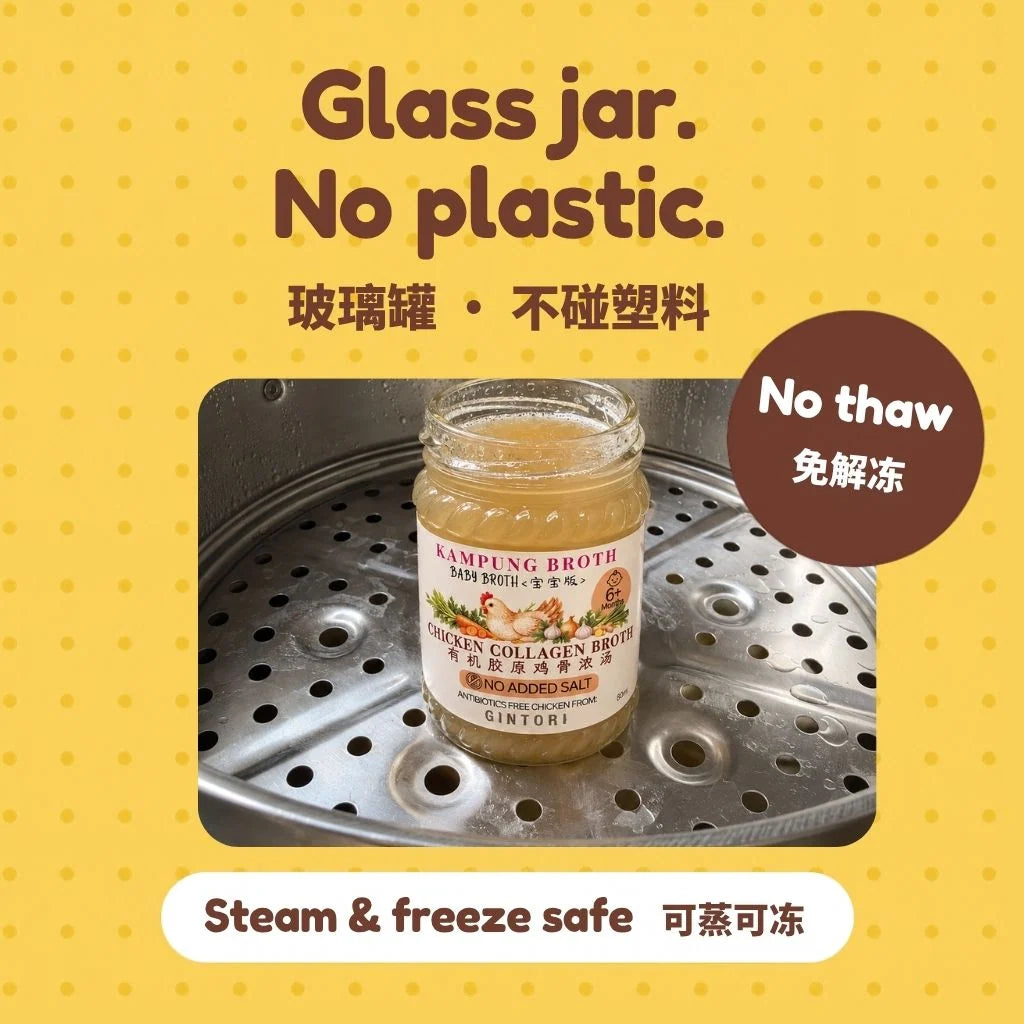
Glass jar, not plastic. Steam from frozen, no thawing needed
-
Easy to digest & gentle on tiny tummies
Each 80ml jar is portioned for flexibility and freshness.
How to reheat & enjoy:
• Open the lid and steam the frozen jar until warmed through. Let it cool and test the temperature before serving.
• Mix into baby porridge, vegetable puree or soft noodles. Dilute 1 part broth to 3 parts water.
Ingredients:
Chicken feet, chicken carcass, carrot, onion, garlic, leek, ginger, celery, shiitake mushroom, Chinese parsley, rosemary, apple cider vinegar.
Storage & Handling
- Keep frozen for longer storage
- Once opened, keep chilled and finish within 4–5 days.
- Recommend not to refreeze after opening
Additional Information:
Caution: Customized cutting is NOT available.注意:恕不接受客制化切割
Storage: Keep frozen at -18°C. For best quality, consume within 3 months.
储存方式:冷冻雪藏 -18°C。购买后3个月内食用,品质最佳。
✅ 100% Preservative Free 绝无防腐
✅ Cleaned & Gutted 去鳞清内脏
✅ Vacuum Packed 真空包装
✅ Flash Frozen 急速冷冻
How we package your order?
How we package your order?
The vacuum sealed seafood products and frozen chill packs, which contain non-toxic gel are packed in a polystyrene box, so the chill packs distribute the cold evenly throughout your fish and seafood, ensuring maximum freshness.
We seal the polystyrene box with packing tape and hand it to our cold chain logistic to deliver to you.
What should I do when my order arrives?
What should I do when my order arrives?
Remove your seafood products as soon as possible from the box, refrigerate all fresh items and freeze all frozen goods until you are ready to prepare them for consumption.
How is your frozen seafood handled? What is your freezing process?
How is your frozen seafood handled? What is your freezing process?
Our fish and shellfish are processed and immediately frozen in our -45°c blast freezer. No chemicals or preservatives are added during the freezing or production process on any of our seafood items.
What is a -45 Degree Freezer and how does it affect the seafood when defrosted?
What is a -45 Degree Freezer and how does it affect the seafood when defrosted?
Blast freezing seafood products at a lower temperature keeps the wall of the cell intact, ensuring that water from the inside does not exit. When defrosted, the quality, texture, and appearance will remain completely intact just as if it were a fresh product.
What is the proper way to defrost frozen seafood products?
What is the proper way to defrost frozen seafood products?
If you have received frozen seafood and placed it in the freezer, remove these items from the freezer and store them in the refrigerator for at least one day before you plan to serve it. Allow 12 to 24 hours for the product to properly defrost. Do not rush the defrosting process as it can affect the flavor and texture of your seafood.
Why are some seafood products unavailable from time-to-time?
Why are some seafood products unavailable from time-to-time?
The availability of seafood products depends upon the season, weather, and other conditions that can affect a catch or harvest. Additionally, the harvesting of many seafood products is regulated in order to maintain a sustainable supply.